Free Tool
Airgun FPE calculator: FPS to foot-pounds and joules
By Golden Guns Outdoors · Published · Updated · Editorial policy
On this page
Quick presets: .177 · 8.44gr @ 900 · .177 heavy · 10.34gr @ 850 · .22 · 18.13gr @ 880 · .22 heavy · 25.39gr @ 850 · .25 · 33.95gr @ 880 · .22 slug · 40.1gr @ 950 (my load)
| Velocity | FPE | Joules |
|---|
How do you convert FPS to FPE?
Square the velocity, multiply by the pellet weight in grains, then divide by 450,436. For a 18.13-grain pellet at 900 fps: 900² = 810,000; × 18.13 = 14,685,300; ÷ 450,436 = 32.6 FPE. The divisor is 2 × standard gravity (32.174 ft/s²) × 7,000 grains per pound, as written in the AAFTA Field Target Rules.
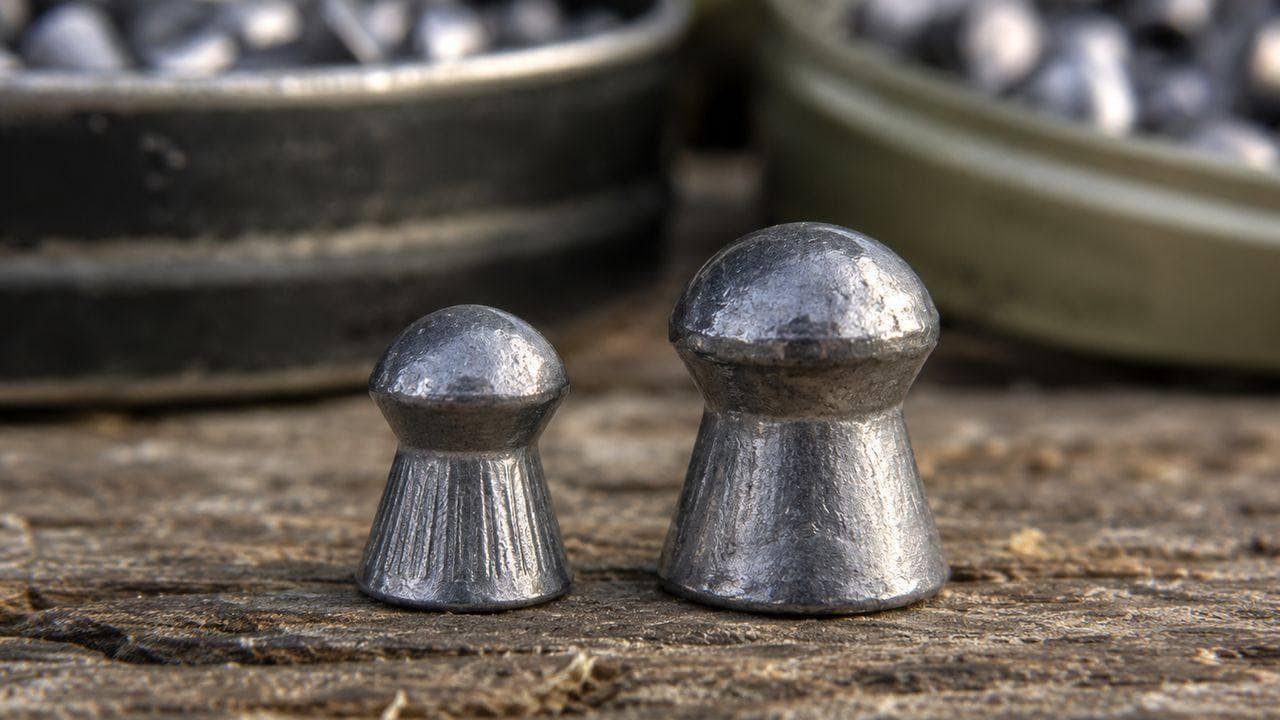
Weight matters as much as speed. At the same 900 fps, an 8.44-grain .177 pellet makes 15.2 FPE while the 18.13-grain .22 makes 32.6, more than double. That's why the .22 is the default hunting caliber.
How do you convert FPE to joules?
Multiply foot-pounds by 1.3558. Divide joules by 1.3558 to go back. The numbers people ask about most:
| Foot-pounds (FPE) | Joules | What it means |
|---|---|---|
| 5.53 | 7.5 | Germany's limit for free-sale (F-mark) airguns |
| 6 | 8.1 | UK air pistol limit without a certificate |
| 12 | 16.3 | UK air rifle limit without a certificate; rough small-game floor at the animal |
| 30 | 40.7 | A typical regulated .22 hunting PCP |
| 80 | 108.5 | My slug-tuned .22 FX Impact M4 (40.1gr at ~950 fps) |
What velocity do you need for a given FPE?
Flip the formula: velocity = √(FPE × 450,436 ÷ grains), or use the "Speed for an energy" mode above. For 12 FPE, an 8.44-grain .177 pellet needs about 800 fps, but an 18.13-grain .22 needs only about 546 fps. A heavier pellet reaches the same energy at a lower, quieter, more stable speed.
How to read the number
Muzzle energy is the start of the story, not the end. Pellets bleed energy every yard downrange, and energy falls with the square of speed: lose 10% of your velocity and you lose about 19% of your energy. The humane working floor for rabbits and squirrels is 9–12+ FPE delivered at the animal, which is why a rifle chronographing ~15+ FPE at the muzzle is the practical small-game minimum at field ranges. Quarry-by-quarry numbers are in the airgun FPE chart, and when slugs make sense is covered in pellets vs slugs.
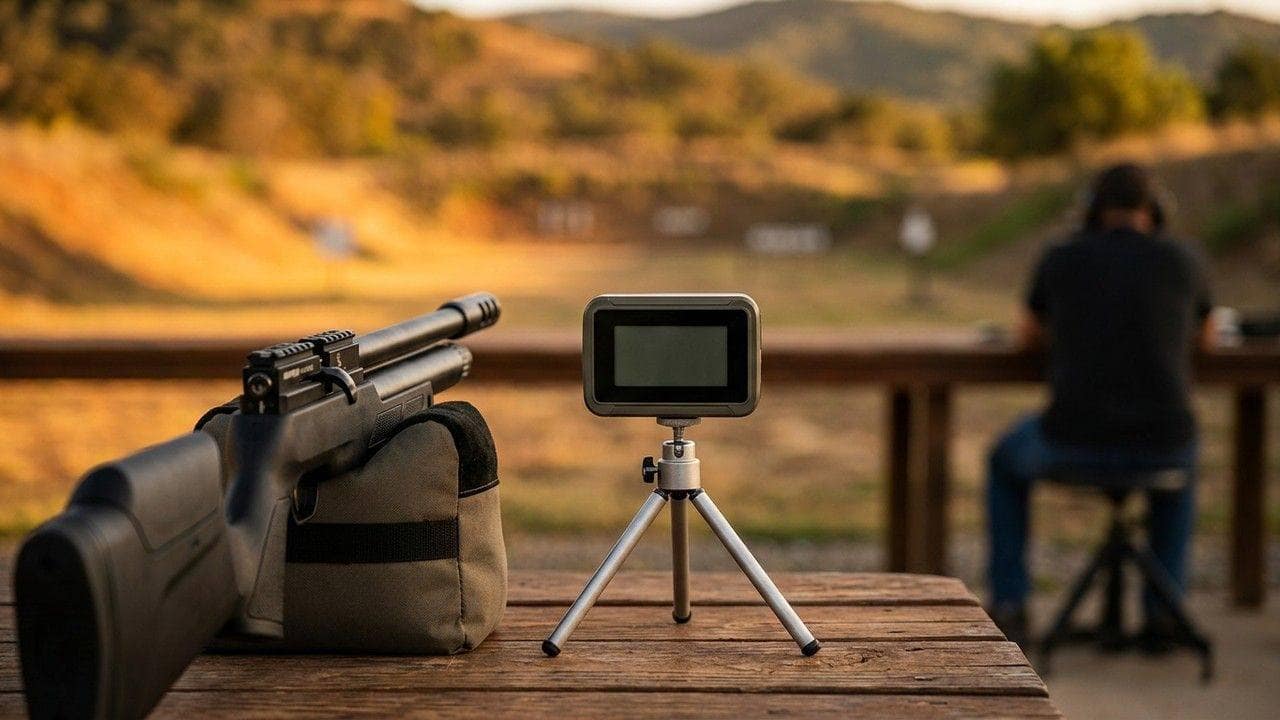
One warning that saves hunts: never use advertised velocity. It's usually measured with featherweight alloy pellets nobody hunts with. Chronograph your actual hunting load (see the best airgun chronographs), and then this calculator tells you the truth.
Airgun power limits: UK, Germany and the US
In Great Britain, an air rifle that makes more than 12 ft-lb, or an air pistol over 6 ft-lb, is "specially dangerous" under the Firearms (Dangerous Air Weapons) Rules 1969 and needs a firearm certificate. Scotland and Northern Ireland also license lower-powered airguns. Germany caps free-sale airguns, marked with the F-in-a-pentagon, at 7.5 joules. The US has no federal energy limit, but state and city airgun laws vary widely; see airgun laws by state. Laws change, so check your current local rules before you buy or shoot.
Caliber and energy toolkit
- Air rifle FPE for hunting: the complete guide, from measuring FPE to energy at the target.
- FPE and ballistics calculators compared: which tool to use for energy, legal limits and holdover.
- Airgun FPE chart: how much energy each quarry needs.
- Best airgun caliber for small game: .22 vs .25 with the energy math.
- .22 vs .25 for rabbit hunting: energy, wind, shot count and cost.
The tool behind the numbers
As an Amazon Associate, Golden Guns Outdoors earns from qualifying purchases. Some links may earn a commission at no cost to you. Prices and availability change. Retailer never decides the recommendation.
FAQ
How do you calculate airgun FPE?
FPE = projectile weight in grains × velocity in fps squared ÷ 450,436, the divisor specified in the official AAFTA Field Target Rules. Example: 18.13 grains at 900 fps = 32.6 FPE.
How do I convert FPE to joules?
Multiply foot-pounds by 1.3558. So 12 FPE is 16.27 joules, 30 FPE is 40.7 J and 80 FPE is 108.5 J. Going the other way, divide joules by 1.3558: Germany's 7.5 J limit is 5.53 FPE.
What velocity do I need for 12 FPE?
Velocity = √(FPE × 450,436 ÷ grains). A .177 pellet of 8.44 grains needs about 800 fps for 12 FPE; a .22 pellet of 18.13 grains needs only about 546 fps. Heavier pellets reach the same energy at lower speed.
Where does the 450,436 divisor come from?
It's 2 × standard gravity (32.174 ft/s²) × 7,000 grains per pound. Older calculators use 450,240, which gives a result about 0.04% higher; the difference doesn't matter in the field, but this site uses the AAFTA number.
How much FPE do I need for rabbits and squirrels?
About 9–12+ FPE delivered at the animal with a head shot, which usually means a rifle making roughly 15+ FPE at the muzzle for normal field ranges.
Is my air rifle legal in the UK?
In Great Britain, an air rifle over 12 ft-lb (16.27 J) or an air pistol over 6 ft-lb counts as specially dangerous and needs a firearm certificate. Scotland and Northern Ireland also license lower-powered airguns, so check the rules where you live.
Does FPE drop with distance?
Yes. Energy falls with the square of velocity, so a pellet that loses 10% of its speed downrange loses about 19% of its energy. That's why the small-game floor is measured at the animal, not the muzzle.
Should I use the advertised velocity?
No. Advertised velocities usually come from light alloy pellets. Chronograph your actual hunting load and enter that number.