Free Service · Farm Protection
Free farm protection in the Imperial Valley and San Diego County
On this page
How it works
- You send a request with the form below, or message me through YouTube, Facebook or Instagram.
- I call you back to ask about the property and the problem, and set a time for a visit.
- Scouting visit, about 20 minutes, no shooting. We walk the property, mark buildings, livestock, roads and backstops, and sign three short forms: permission, a filming release and a safety plan.
- Removal sessions on days that suit you, in daylight, following the safety plan.
- You get the video and a written field report with the count, species and dates. I come back whenever the birds or squirrels build up again.
What I remove, and why it's legal
| Animal | California rule | Where they cause damage |
|---|---|---|
| Domestic (feral) pigeons, European starlings, house sparrows | May be taken at any time and in any number (14 CCR §472). Banded homing pigeons are left alone | Dairies, feedlots, barns, feed and grain storage |
| Eurasian collared doves | Non-native; all-year season with no limit (14 CCR §300) | Farmyards, feedlots, groves |
| California ground squirrels | Nongame mammal; an agent with written permission may take them when they damage crops or property (FGC §4152) | Orchards, pastures, berms, field edges |
| Black-tailed jackrabbits | Same written-permission rule (FGC §4152) | Alfalfa, hay and vegetable fields |
| Cottontails | May be taken any time while crops or forage are being damaged, with the owner's or tenant's written authority (FGC §4186) | Groves, gardens, field edges |
| Coyotes | May be taken at any time and in any number (14 CCR §472); an agent with written permission may take them when they injure livestock or property (FGC §4152). Daylight only, big-bore air rifle, open ground | Calving pens, sheep and goat pastures, poultry yards |
This is a summary of the regulation text linked in Sources, not legal advice. Mourning doves and other native birds are never taken; they're federally protected.
Where I work
Imperial Valley: Brawley, Imperial, El Centro, Calipatria, Holtville and Westmorland, on dairies, cattle feedlots, alfalfa and vegetable farms, equestrian barns, and sheep, goat and calving ground. Rural San Diego County: Fallbrook, Valley Center and Pauma Valley groves; Ramona, Jamul, Dulzura, Campo and Boulevard ranches and vineyards; and Borrego Springs farms.
I don't shoot inside city limits or on suburban lots. California bars hunting within 150 yards of any occupied home, or its barn or outbuilding, without that occupant's permission (FGC §3004), and many cities ban air guns outright. If a neighbor's house is within 150 yards of where we'd shoot, I'll need their permission too.
Why air rifles
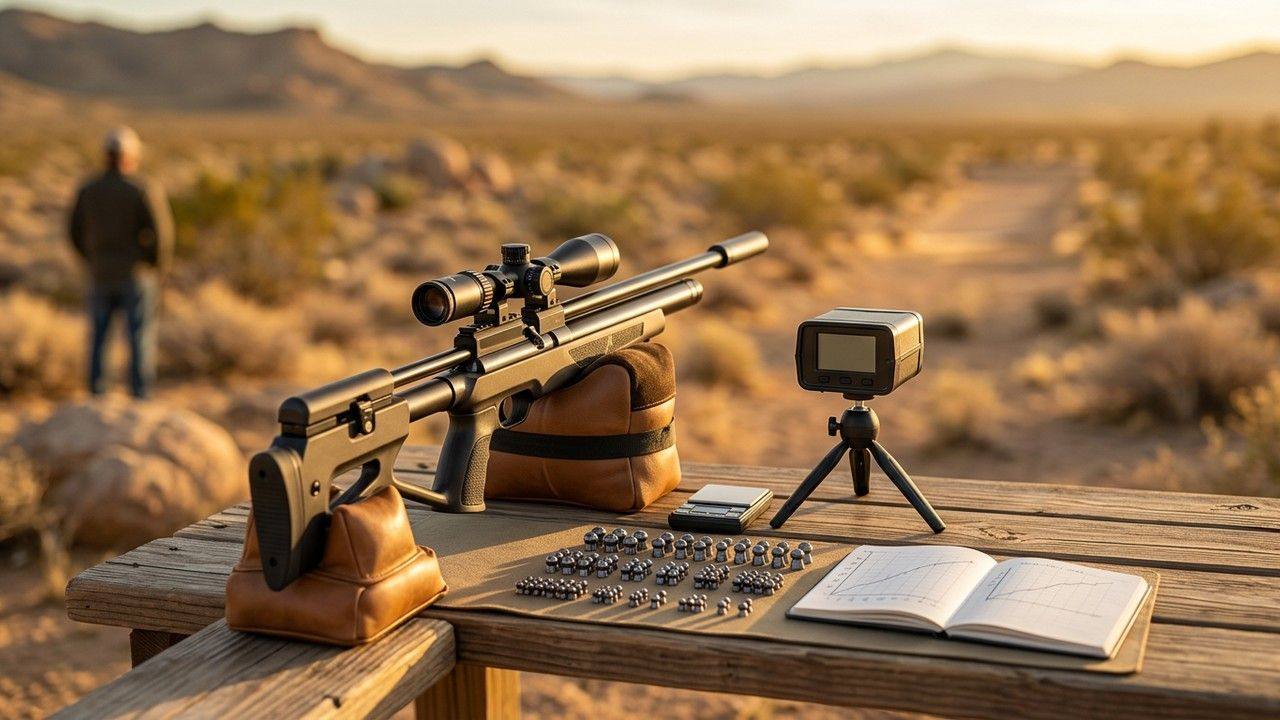
Farm protection is mostly about what doesn't get hit. A precision air rifle is far quieter than a firearm, so livestock and neighbors barely notice, and a pellet carries a fraction of a bullet's energy and range. That makes it the right tool around barns, feed bunks and equipment. Here's how I keep collateral damage at zero:
- Power matched to the place. Near buildings and animals I shoot pellets at low power into solid backstops. Full-power slugs, and the big-bore rifle for coyotes, are only for open ground with dirt behind the animal. See my airgun FPE chart for the energy each animal needs.
- No shots toward roofs, metal or concrete, where pellets bounce.
- Every shot is recorded through a scope camera, so there's a record of exactly where the rifle was pointed.
- Lead-free isn't required for air rifles in California, since CDFW doesn't treat pellet rifles as firearms. Carcasses are disposed of the way you ask.
The rules I follow on every property
- Written permission from the owner or tenant, carried on me the whole time
- A California hunting license on me at all times
- Daylight only, with no night vision or thermal (FGC §2005)
- No trapping, no poison, no pesticides
- Never paid, and nothing taken is ever sold
- A written safety plan, checked before every session
Filming and your privacy
The work is filmed for the James Southern Outdoors Hunting channel: a scope camera on the rifle and a camera on me. Before anything is filmed, we sign a short release that keeps your address, house numbers and license plates off camera. You decide whether you appear on screen and whether you're named or thanked. If you'd like a shout-out for your farm or business, that's yours to choose.
Field reports from each property will be published on this site as the work happens, with the dates, species, counts and distances. That's first-hand data you won't find anywhere else.
Request a visit
Tell me about the property and the problem. I'll call you back to set up a scouting visit.
FAQ
Is the farm protection really free?
Yes. There's no charge and never will be. In exchange, I film the work for my YouTube channel, James Southern Outdoors Hunting. I also don't sell anything I take, which California law forbids for rabbits taken on damaged land anyway (Fish and Game Code §4186).
What animals do you remove?
Domestic (feral) pigeons, European starlings, house sparrows, Eurasian collared doves, California ground squirrels, black-tailed jackrabbits, cottontails that are damaging crops or forage, and coyotes. California lets pigeons, starlings, house sparrows, coyotes and opossums be taken at any time and in any number (14 CCR §472), and lets an agent with the owner's written permission take ground squirrels, coyotes and jackrabbits that are injuring crops or other property (FGC §4152), and cottontails (FGC §4186).
Where do you work?
Farms, dairies, feedlots, groves and ranches in the Imperial Valley (Brawley, Imperial, El Centro, Calipatria, Holtville, Westmorland) and rural San Diego County (Fallbrook, Valley Center, Ramona, Jamul, Campo, Borrego Springs and similar areas). I don't shoot inside city limits or on suburban lots.
Can you come to my house in town?
Usually not. Cities commonly ban discharging air guns, and California law bars hunting within 150 yards of any occupied home or its outbuildings without that occupant's permission (FGC §3004), which rules out most town lots. If you know a farmer or rancher with the same problem, I'd be glad to help them.
Is it safe around livestock and buildings?
Every property gets a written safety plan before the first shot: buildings, livestock, roads, people and backstops are mapped, and no-shoot directions are marked. Near barns and animals I use pellets at low power and shoot only into solid backstops, never toward roofs, metal or concrete.
Do you work at night or use thermal?
No. California bans night vision equipment for taking almost any animal (FGC §2005), and its landowner exception doesn't cover a volunteer. All work is in daylight.
Do you remove coyotes?
Yes, in daylight and in open ground. Coyotes may be taken year-round in any number in California (14 CCR §472), and an agent with written permission may take them when they're injuring livestock or other property (FGC §4152). Coyote work uses a big-bore air rifle, since the airgun FPE chart puts coyotes at roughly 40 to 100 foot-pounds of energy, and only close, broadside shots with a dirt backstop, well away from buildings and livestock. No night hunting and no thermal: California's night vision ban (FGC §2005) doesn't make an exception for a volunteer.
Will my farm be identified in the video?
Only if you want it to be. A filming release sets the rules before we start: no address, house numbers or license plates on camera, and you decide whether you appear or are named.
Do you trap or use poison?
No. Shooting only. Trapping and pesticide work for other people bring separate licensing, and I don't do either.
What paperwork is involved?
Three short forms, signed at a 20-minute scouting visit: a permission and access letter (your written authority under FGC §4152 and §4186, and the 150-yard permission under §3004), a filming and location release, and a safety plan for your property.
Sources
- Cal. Code Regs. tit. 14, §472: nongame birds and mammals that may be taken (Cornell LII)
- California Fish and Game Code §4152: nongame mammals and jackrabbits injuring crops or property
- California Fish and Game Code §4186: cottontails and brush rabbits damaging crops
- California Fish and Game Code §3004: hunting within 150 yards of an occupied dwelling
- California Fish and Game Code §2005: night vision and artificial light
- CDFW: Nonlead ammunition in California (pellet rifles are not firearms)