Optics Brand · Pulsar
Pulsar: brand guide to thermal and night vision optics
Researched by James · Updated September 26, 2026 · Editorial policy
On this page
Ownership, headquarters and manufacturing claims come from Pulsar's own about-us page. Warranty terms come from Pulsar's official support documentation. Pricing and specs come from Pulsar's US retail site and a 2026 independent thermal scope test, all cited at the bottom of this page. Full methodology & editorial policy →
Quick facts
| Founded | 1991 (engineering roots in Lida, Belarus); US operations established with a Mansfield, Texas team in 1998 |
|---|---|
| Headquarters | Lithuania (Yukon Advanced Optics Worldwide, the European group that owns the Pulsar brand) |
| Where made | Developed, designed and manufactured in Europe, per Pulsar's own "Made in Europe" claim |
| Parent company / owner | Pulsar is a brand of Yukon Advanced Optics Worldwide, a European company group |
| Known for | The Thermion and Talion thermal riflescope lines and the Axion thermal monocular |
| Typical price range | About $1,199.97 (Axion XM30F monocular) to $7,199 (Thermion 2 LRF XL60 flagship riflescope) |
| Warranty | 3 years standard in the US (pre-2024 units); 5 years total with registration on newer units; 1 year on batteries, docks and refurbished units |
What does Pulsar make?
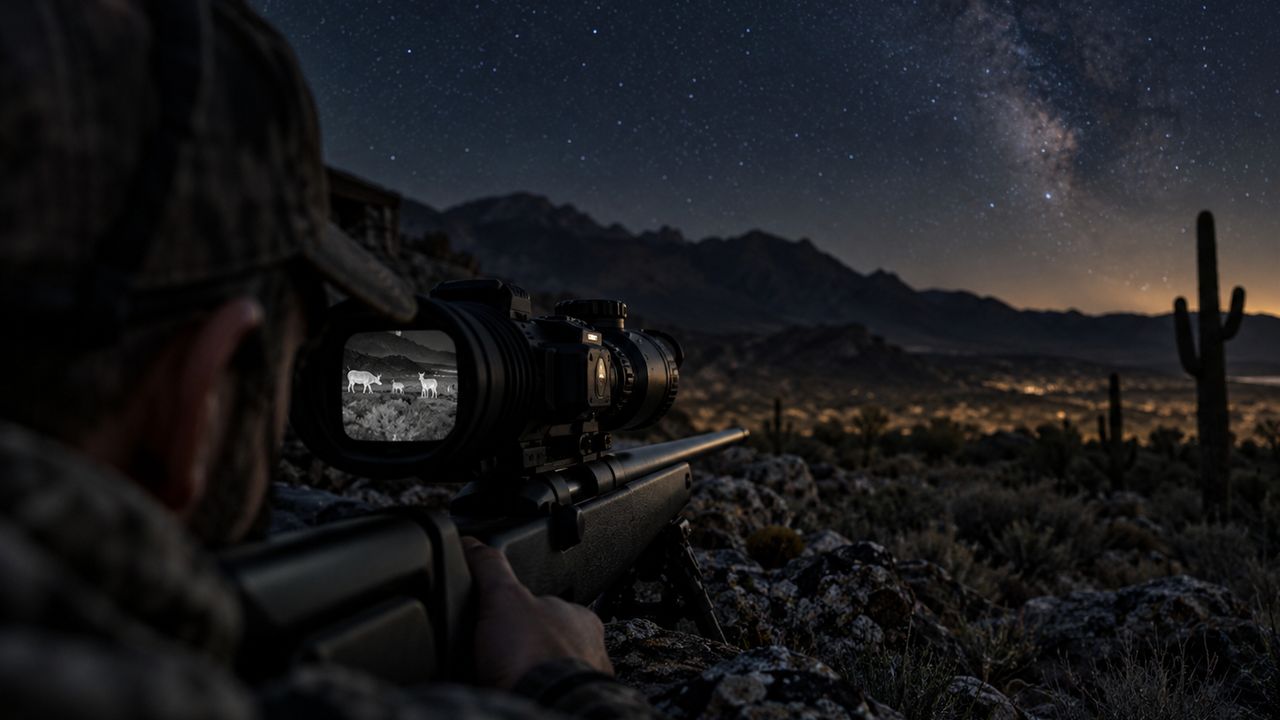
Pulsar's catalog is built entirely around thermal and digital night-vision imaging: weapon-mountable Thermion and Talion riflescopes, handheld Axion monoculars for scanning and spotting, and Merger thermal binoculars for two-eyed glassing. It doesn't make conventional glass riflescopes at all — everything in the lineup reads heat rather than reflected light, which is the fundamental trade-off covered in my thermal vs night vision comparison.
Current lineup
| Line | Type | Sensor / lens | Typical price | Best for |
|---|---|---|---|---|
| Axion XM30F | Thermal monocular | 320x240, handheld | About $1,199.97 | Scanning and spotting before you shoot with a different optic |
| Thermion XM30 3.5-14x25 | Thermal riflescope | 320x240, 25mm lens | About $2,529.99-$2,909.49 | Entry-to-mid weapon-mounted thermal |
| Talion | Compact thermal riflescope | Varies by model | Mid-tier, above entry Thermion | Shooters wanting a lighter, higher-refresh-rate thermal scope |
| Merger | Thermal binocular | Varies by model | Mid-to-premium | Two-eyed thermal glassing over long sessions |
| Thermion 2 LRF XL60 | Flagship thermal riflescope | 1024x1024, 60mm lens | About $7,199 | Long-range identification; Outdoor Life's 2026 Editor's Choice |
Prices above come from Pulsar's US retail site and a 2026 independent thermal scope test, checked September 2026; thermal optics pricing and stock move often, so confirm current numbers before buying. For the full field of tested thermal scopes across brands, not just Pulsar, see best thermal scopes for hunting.
Best Pulsar picks for hunting
- Thermion XM30 3.5-14x25 — the practical entry point into weapon-mounted Pulsar thermal, at 320x240 resolution.
- Axion XM30F — a genuinely useful, much cheaper spotting tool if you already have a day scope or digital night scope for the actual shot.
- Thermion 2 LRF XL60 — the flagship pick if budget supports it, with a built-in laser rangefinder and the highest resolution in Pulsar's lineup.
Pairing a thermal spotter with a separate optic for the shot is a common, cost-effective setup; see the full breakdown in thermal vs night vision for hunting. On my own rig I run a digital day/night scope rather than thermal — see my honest DNT Zulus 4K review for the trade-offs at a much lower price point.
Pros and cons
Good fit
- Hunters who want a proven, independently tested thermal brand with a broad price ladder
- Predator and hog hunters needing real detection through darkness, fog or brush
- Airgun hunters shopping through Utah Airguns, which stocks Pulsar specifically
Look elsewhere
- Budget buyers — even Pulsar's cheapest monocular starts around $1,200
- Anyone wanting a longer standard US warranty without needing to register for it
- Hunters in states or on species where thermal optics for hunting are restricted or banned
How Pulsar compares
Against ATN, Pulsar generally sits at a higher starting price but with a manufacturing story rooted in Europe rather than ATN's US-headquartered, more varied sourcing; both brands compete directly in the mid-to-flagship thermal tier. Against Hikmicro, Pulsar has a much longer-established US retail presence and dealer network, while Hikmicro's hunting-focused thermal lineup is more readily available through international and UK retailers than through official US channels. Against Sig Sauer's smaller ECHO thermal line, Pulsar simply offers far more models across more price points.
Verdict
Pulsar is a strong, well-tested choice if thermal detection is genuinely what you need and the budget supports at least $2,500 for a usable weapon-mounted scope, or about $1,200 for a spotting-only monocular. Confirm your state and species allow thermal for your kind of hunting before you buy, and register your unit promptly to get the full US warranty extension.
Shop Pulsar Thermal Optics
As an Amazon Associate, James Southern Outdoors earns from qualifying purchases. Some links may earn a commission at no cost to you. Prices and availability change. Retailer never decides the recommendation.
FAQ
Is Pulsar a good thermal optics brand?
Yes, Pulsar is one of the most established names in consumer thermal imaging, with a lineup spanning entry-level monoculars to flagship riflescopes rated among the best-tested in independent reviews. The Thermion 2 LRF XL60 was Outdoor Life's 2026 Editor's Choice for weapon-sight thermal scopes. Pulsar's standard US warranty (3 years) is shorter than some competitors' unless you register for the extension.
Where is Pulsar made, and who owns it?
Pulsar is a brand of Yukon Advanced Optics Worldwide, a European company group headquartered in Lithuania. The company's engineering roots trace back to 1991 in Lida, Belarus, with a US operation established in Mansfield, Texas in 1998. Pulsar states its products are developed, designed and manufactured in its European factories, carrying a "Made in Europe" label rather than being made in the US or Asia.
How much does a Pulsar thermal scope cost?
Entry-to-mid pricing starts around $2,500-$2,900 for a riflescope like the Thermion XM30 3.5-14x25 (320x240 sensor), while the flagship Thermion 2 LRF XL60 (1024x1024 sensor, 60mm lens) runs about $7,199. Pulsar's Axion thermal monoculars, meant for spotting rather than mounting on a rifle, start lower — the Axion XM30F runs about $1,199.97.
What's the difference between Pulsar's Thermion, Talion and Axion lines?
Thermion and Talion are both weapon-mountable thermal riflescopes, with Thermion the broader, longer-running line and Talion a more compact, higher-refresh-rate design; Axion is a handheld thermal monocular meant for scanning and spotting, not for mounting on a rifle. Pulsar also sells the Merger line of thermal binoculars for two-eyed glassing.
What's Pulsar's warranty?
Pulsar's standard US warranty is 3 years for units purchased or manufactured before January 1, 2024; units purchased or manufactured after that date can get a 2-year extension (5 years total) by registering the device, though registration is required to unlock it. Rechargeable battery packs, charging docks and refurbished units get only 1 year, and the warranty is voided by unauthorized service, liquid exposure or physical damage.
Is it legal to hunt with a Pulsar thermal scope?
It depends entirely on your state and the species. Some states allow thermal for hogs, coyotes and other nongame pests while restricting or banning it for protected big game, and California goes further, banning night vision equipment (a category that includes thermal) for taking almost any game bird, mammal, amphibian, reptile or fish. Always confirm your state wildlife agency's current rule before hunting with any thermal device; see my night hunting and the law guide for the state-by-state pattern.
Can I buy Pulsar at Utah Airguns?
Yes — Utah Airguns stocks Pulsar thermal scopes and night vision devices, which is a useful signal for airgun hunters specifically, since a dedicated airgun retailer choosing to carry a brand generally means it's been vetted for that use case rather than only general firearm hunting.
Sources
- Pulsar — About Us (Yukon Advanced Optics Worldwide, Lithuania headquarters, 1991 founding)
- Pulsar — Warranty & Return Policy
- Pulsar USA — Thermion XM30 3.5-14x25 thermal riflescope (price, sensor specs)
- Pulsar USA — Axion XM30F thermal monocular (price, sensor specs)
- Outdoor Life — The Best Thermal Scopes of 2026, Tested and Reviewed (Thermion 2 LRF XL60 pricing and test result)
- California Fish and Game Code §2005 — artificial light and night vision restrictions