Field Guide · Pigeons
Pigeon hunting with an air rifle
Researched by James · Updated September 26, 2026 · Editorial policy
On this page
The federal legal status below comes from the rule listing non-native bird species the Migratory Bird Treaty Act doesn't cover, linked in Sources. State and local law vary, so confirm both before you hunt. Full methodology & editorial policy →
Why pigeons are legal where doves aren't
Feral rock pigeons (Columba livia) are the descendants of domesticated birds that went wild across North America — not a native species. The federal rule that lists bird species outside the Migratory Bird Treaty Act's protection specifically includes the rock pigeon. That's the opposite legal status from mourning doves, which are native migratory game birds federal law bans rifles from taking. The same logic that makes Eurasian collared doves legal in California applies here: non-native status removes federal protection, but nothing about it removes state or local rules.
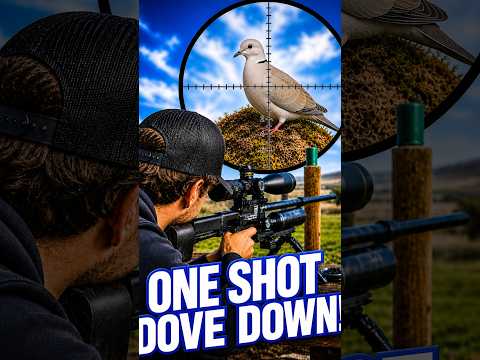
Pigeons and Eurasian collared doves at 100-130 meters with the FX Impact M4 and 40.1gr slugs, Mexico desert.
Where pigeons actually are: barns, warehouses, and ledges
Pigeons gather where there's shelter and a food source: barn rafters, warehouse ledges, grain facilities, and building eaves. That's exactly why landowners with a pigeon problem — droppings, contamination risk, damaged structures — are often glad to have an airgun hunter deal with it, which makes pigeon control one of the more welcoming pest jobs to get permission for. It also means most shots happen around structures, not open fields, which changes the safety math.
The backstop problem around buildings
This is the part that trips people up. A pigeon on a rafter or roofline often has nothing behind it but open sky, or a wall on the far side of the building you can't see through. Treat the same rule that applies to birds anywhere: no confirmed backstop, no shot. Good options around structures include a bird against an interior wall, on a floor or low ledge, or silhouetted against a solid surface you know stops a pellet. Skip anything near glass, skylights, livestock, or a doorway someone could walk through.
Energy and caliber
Pigeons are bigger and tougher than most people expect from a "city bird" — closer in toughness to a small rabbit than to a sparrow. Plan on 12+ FPE arriving at the bird, the same floor used for collared doves, in a .22. Verify what your rifle delivers with the FPE calculator and the full breakdown on the airgun FPE chart.
Shot placement
- Head: the cleanest kill, best on a steady, close bird.
- Upper chest: on a bird facing you, just below the neck — a bigger target that still drops the bird where it sits.
- Avoid: low body shots, which usually mean a bird that flies off wounded into a rafter or vent you can't reach.
The full aim-point reference across every quarry is in airgun shot placement.
Legal checklist before you hunt
- Confirm the species is a feral rock pigeon, not a native look-alike.
- Check state wildlife law for any specific rule on non-native pest birds.
- Check local discharge ordinances — many cities restrict firing any projectile within limits regardless of target.
- Get explicit landowner permission, whether it's a barn, warehouse, or private residence.
For the broader legal comparison between pigeons and the doves they're often confused with, see can you hunt doves with an air rifle.
Verdict
Pigeons are a legitimate, federally unprotected pest bird that plenty of property owners want gone — but the building-heavy environment they live in makes backstop discipline the real skill here, more than energy or caliber. Get permission, confirm the ID, and only shoot where a miss has somewhere safe to go.
FAQ
Is it legal to hunt pigeons with an air rifle?
Feral rock pigeons are non-native and are specifically listed as a species the federal Migratory Bird Treaty Act does not cover. That removes the federal hurdle, but state wildlife law and city discharge ordinances still apply, and you need the landowner's permission wherever you're shooting.
Are all pigeons legal to shoot?
No. That exemption covers the feral rock pigeon (Columba livia), the bird you see on buildings and in city parks. Native species like the band-tailed pigeon are protected migratory game birds with their own seasons and legal methods, and a rifle isn't one of them. Confirm the ID before you shoot.
How much FPE do you need for pigeons?
12+ FPE delivered at the bird. Pigeons are bigger and tougher than they look, closer to a small rabbit than a songbird, so treat them like doves rather than like sparrows.
Where do you aim on a pigeon with an air rifle?
The head, or the upper chest just below the neck on a bird facing you. Both anchor the bird where it sits. A low body hit is the most common way to end up with a wounded bird that flies off.
Can you shoot pigeons around buildings and barns?
Only where there's a genuine backstop — a wall, a floor, a solid surface that stops the pellet, not open sky or a street beyond. Never shoot toward glass, livestock, or anywhere a ricochet could reach a person.
Why do pigeons gather in barns and warehouses?
Shelter, ledges to roost on, and often a reliable food source like spilled grain. Those same features make them a genuine pest problem for property owners, which is why pigeon control is one of the most common reasons landowners invite an airgun hunter onto their property.
Do you need permission to shoot pigeons on someone else's property?
Yes, always. Even where pigeons are legal to take and unprotected federally, you're on private or public land either way, and discharging a firearm or air rifle without permission is a separate legal problem regardless of the target.