Rifle Hunting · How-To
How to clean a hunting rifle
Researched by James · Updated September 26, 2026 · Editorial policy
On this page
- How to clean a hunting rifle (the short version)
- How often should you actually clean it?
- Solvent and tools: what to actually use
- Breech or muzzle: which end do you clean from?
- Does cleaning change your zero?
- End-of-season cleaning and storage
- Pre-season checklist beyond the bore
- Firearm cleaning vs. air rifle cleaning: not the same job
- FAQ
- Sources
This routine is built from NRA/American Hunter's published gun-cleaning guidance and Outdoor Life's pre-season rifle checklist, all linked in Sources. I hunt with air rifles, not centerfire rifles, so this is a research guide rather than a report from my own cleaning bench — see how to clean an air rifle barrel for the routine I actually use. Full methodology & editorial policy →
How to clean a hunting rifle (the short version)
- Unload the rifle and verify the chamber is empty. Every cleaning session starts here, no exceptions.
- Insert a bore guide into the action to protect the crown and keep the rod centered, then run solvent-soaked patches through from the breech (or the muzzle, with a muzzle guide, on lever-actions and autoloaders).
- Brush the bore with a nylon or bronze brush matched to your solvent, working from the chamber toward the muzzle in full strokes, roughly 15-20 passes for a bore that's seen a full season.
- Run dry patches through until they come out clean, then check specifically for copper: a dedicated copper solvent turns a patch blue-green if fouling remains.
- Wipe down the action, bolt, and magazine well with a solvent-dampened cloth and an old toothbrush for tight spots, then lightly oil every metal surface.
- Leave a thin film of oil in the bore for storage, or wipe it mostly dry with a patch if you're heading straight back out to hunt in dusty conditions.
How often should you actually clean it?
Less often than a rigid schedule would suggest. American Hunter's own gun-cleaning writers are candid that they don't clean on a fixed calendar either — a daily carry gun gets frequent attention, while a deer rifle mostly gets cleaned after the season ends, with a bore snake used mid-season after a wet or dusty hunt rather than a full strip-down every time. The two moments that matter most are before the season starts, so you're shooting a known, consistent bore, and at the end of the season, so corrosive fouling doesn't sit in the barrel for months of storage.
Solvent and tools: what to actually use
| Job | Tool / product type | Notes |
|---|---|---|
| Standard powder fouling | Hoppe's No. 9, M-Pro 7, Birchwood Casey Gun Scrubber | The everyday solvent for most cleaning sessions |
| Copper fouling | Ammonia-based copper solvent (e.g. Barnes CR-10) | Use only when patches keep coming out blue after standard solvent |
| Brush | Bronze for standard solvent, nylon for ammonia-based copper solvent | Bronze can react with ammonia-based solvents; match the two |
| Rod | One-piece, coated (nylon-coated steel or carbon fiber) | Avoid jointed rods, which can flex and drag against the crown |
| Lubricant | Rem Oil, M-Pro 7, Hoppe's Black; powdered graphite below about -40°F | A thin film, not a soak — excess oil attracts dust and grit |
Breech or muzzle: which end do you clean from?
Whichever end keeps a cleaning rod off the crown, since that last fraction of an inch of rifling controls accuracy more than any other part of the barrel. Bolt-action rifles are built for breech cleaning with a bore guide protecting the action and the throat. Lever-action rifles and semi-autos are usually cleaned from the muzzle instead, since their actions don't offer the same clean breech access — use a muzzle guide there to keep the rod centered and off the crown.
Does cleaning change your zero?
Often, yes, and it's the single most overlooked step in a pre-season routine. Outdoor Life's own pre-season checklist is direct about it: "most rifles will have slightly different points of impact between a clean barrel and a fouled barrel." The fix is simple — fire 2-5 fouling shots after any deep clean, let the rifle cool, then fire a group to confirm the zero before you trust the rifle on an actual hunt. If you're also checking elevation dial adjustments for longer shots, verify those separately at real distance rather than assuming the dial's math matches the rifle.
End-of-season cleaning and storage
A deeper clean at the end of the season matters more than mid-season touch-ups, since fouling left in a bore over months of storage is what actually causes long-term corrosion. Wipe down the action and magazine well, oil the bolt and all inner and outer metal surfaces lightly, and check under the stock for hidden rust or moisture. For wood stocks with an oil finish, a 50/50 linseed oil and turpentine mix on dry spots keeps the wood from drying out; composite and varnished stocks just need a wipe-down. Store the rifle in a clean, dust- and moisture-free spot, muzzle-down or horizontal in humid climates so oil doesn't migrate into the action, and consider a silicone gun sock if your storage area is dusty.
Pre-season checklist beyond the bore
Cleaning is one piece of getting a rifle ready, not the whole job. Outdoor Life's pre-season routine also includes torque-checking action screws and scope ring screws with a proper torque wrench or driver, inspecting under the stock for rust, and weatherproofing the muzzle with a strip of electrical tape to keep debris out in the field. If you haven't already confirmed your zero fresh for the season, do that after cleaning and fouling the barrel, not before — see how to sight in a rifle scope at 100 yards for the full process.
Firearm cleaning vs. air rifle cleaning: not the same job
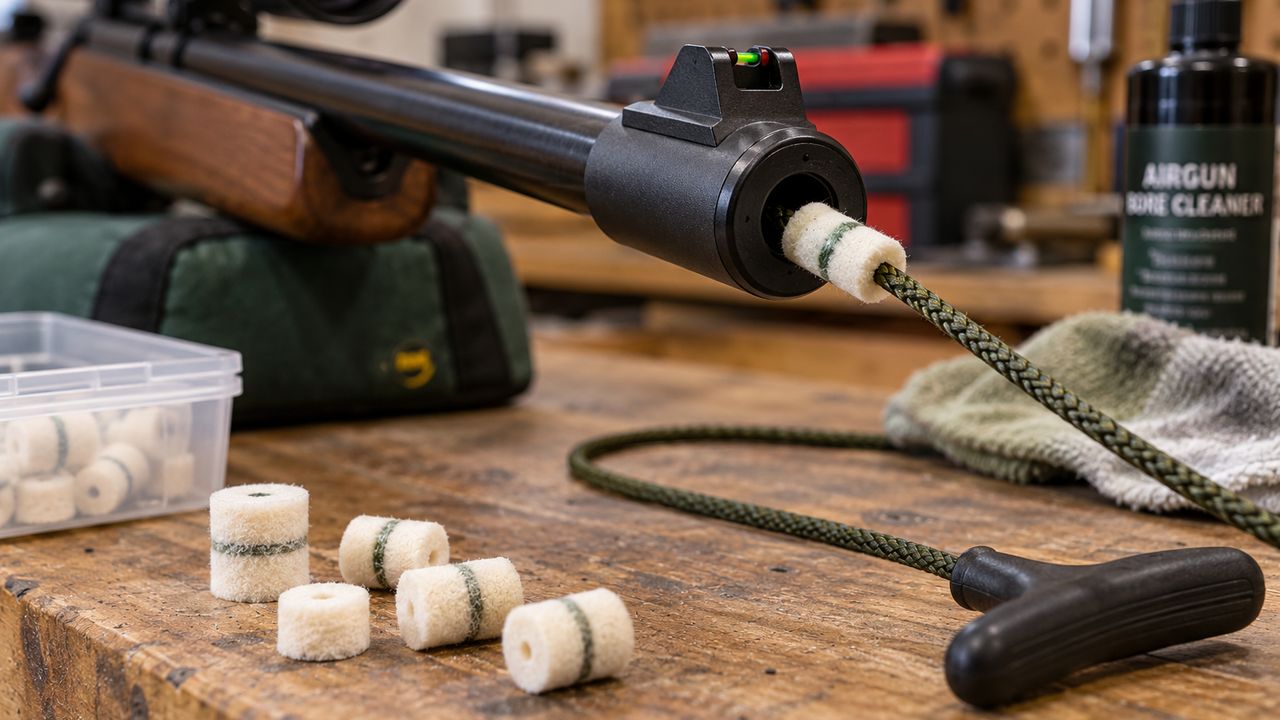
A centerfire rifle burns gunpowder every shot, leaving carbon and copper fouling that solvent and brushing are built to remove. An air rifle fires a lead pellet or slug with no combustion at all — there's no powder fouling to speak of, and airgun barrels are typically softer steel or brass that the aggressive solvents and stiff brushes above would actually damage. If you also shoot a PCP or springer, don't apply this page's routine to it; see how to clean an air rifle barrel for the very different, much lighter-touch approach that airguns actually need.
Verdict
Clean from the breech with a bore guide, use a standard solvent for routine fouling and a dedicated copper solvent when patches keep coming out blue, and don't skip the fouling shots before you trust a freshly cleaned rifle's zero in the field. Clean before the season, after wet or dusty hunts, and thoroughly at the end of the season — a fixed weekly or monthly schedule isn't necessary and can do more harm than good if it turns into an excuse to over-brush a barrel that wasn't the problem.
Rifle cleaning gear worth having on hand
As an Amazon Associate, James Southern Outdoors earns from qualifying purchases. Some links may earn a commission at no cost to you. Prices and availability change. Retailer never decides the recommendation.
FAQ
How often should you clean a hunting rifle?
There's no fixed schedule — American Hunter's own gun-cleaning writers admit they don't follow a rigid one either, cleaning a carry gun often and a deer rifle mainly after the season, with a bore snake used mid-season in wet or dusty conditions instead of a full cleaning. At minimum, clean before the season starts and again at the end of it.
Does a freshly cleaned barrel shoot to the same point of impact?
Not always. Outdoor Life notes that "most rifles will have slightly different points of impact between a clean barrel and a fouled barrel," which is why they recommend firing 2-5 fouling shots and letting the barrel cool before trusting a zero you haven't checked since cleaning, especially right before a hunt.
What solvent should you use on a hunting rifle?
A standard powder solvent like Hoppe's No. 9, M-Pro 7, or Birchwood Casey Gun Scrubber for everyday fouling, and a dedicated copper solvent (ammonia-based, such as Barnes CR-10) when patches keep coming out blue after the standard solvent has done its work. Match the brush to the job: nylon brushes are safer with ammonia-based copper solvents than bronze.
Do you clean a rifle from the muzzle or the breech?
From the breech whenever the rifle's design allows it — bolt-action rifles clean this way with a bore guide protecting the action and the crown. Lever-action and autoloading rifles are typically cleaned from the muzzle instead, since their design doesn't allow easy breech access; use a muzzle guard to protect the crown on those.
How do you know if a barrel has copper fouling?
Run a copper-specific solvent on a patch through the bore and check the color: if the patch comes out streaked or solid blue-green, copper is still present, and the process repeats until patches come out clean. Standard powder solvent alone won't reliably remove copper fouling from a centerfire barrel.
What do you use to protect the crown while cleaning?
A bore guide, inserted in the action before the rod goes down a bolt gun's barrel, keeps the rod centered and off the rifling near the chamber. For rifles cleaned from the muzzle, a muzzle guide serves the same purpose at the other end, since the last fraction of an inch of rifling — the crown — controls accuracy more than any other part of the bore.
How do you store a hunting rifle after cleaning?
In a clean, dust- and moisture-free environment, with a thin film of oil left in the bore in humid climates or wiped mostly dry in arid ones. Store the rifle muzzle-down or horizontal in humid areas so oil doesn't migrate back into the action, and a silicone gun sock helps in dusty storage conditions.
Is cleaning a hunting rifle different from cleaning an air rifle?
Yes, fundamentally. A firearm burns gunpowder and leaves carbon and copper fouling that needs solvent and brushing to remove; an air rifle fires a lead pellet with no combustion at all, so airgun barrels rarely need cleaning and never need powder or copper solvent. See how to clean an air rifle barrel for the airgun-specific routine, which is almost the opposite approach.